
Meet Turbovec: A Rust Vector Index with Python Bindings, and Built on Google’s TurboQuant Algorithm
The Avocado Pit (TL;DR)
- 🥑 Turbovec delivers 16x compression in vector search without the usual headaches.
- 🔧 Built on Google's TurboQuant algorithm, it's the new kid on the RAG block.
- 🤝 Rust meets Python: a match made in vector heaven.
Why It Matters
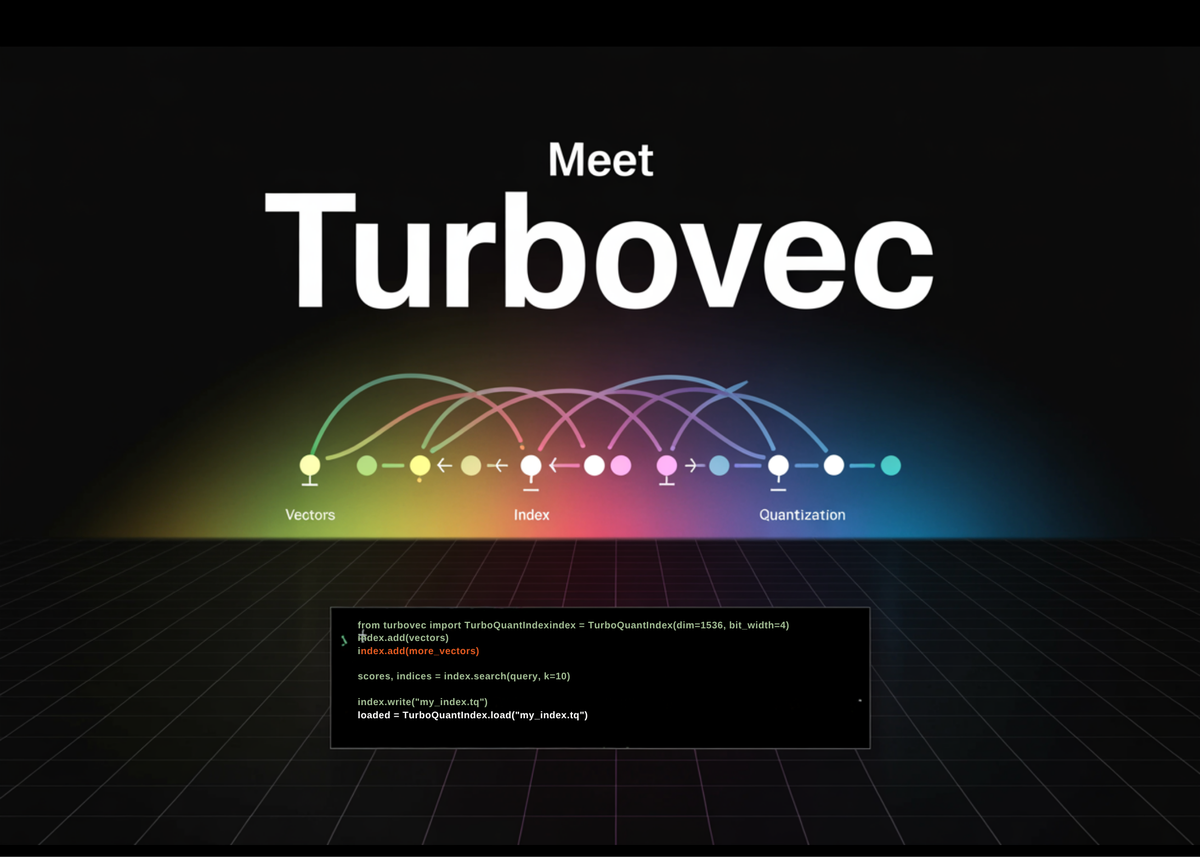
If you’ve ever tried to squeeze a cat into a sweater, you’ll understand the frustration of compressing data without losing its fluffiness. Enter Turbovec, a Rust-based vector index that promises to make your data as snug as a bug, while playing nicely with Python thanks to its bindings. With Google’s TurboQuant algorithm at its core, it's like giving vector search a pair of rocket boots—16x compression without the hassle of codebook training. If that doesn’t make your data scientist heart flutter, nothing will.
What This Means for You
For those in the AI trenches, Turbovec is more than just a shiny new toy. It’s a tool that promises to streamline RAG (Retrieval-Augmented Generation) pipelines, making your searches faster and more efficient. The Python bindings mean it integrates smoothly into existing workflows, so you can unleash Rust’s power without needing a translator. This could be your ticket to handling more data with less fuss—perfect for those who wake up in cold sweats over bloated databases.
The Source Code (Summary)
Turbovec is the latest breakthrough in vector indexing, utilizing Google’s TurboQuant algorithm to offer a staggering 16x data compression. Its Rust foundation ensures performance and speed, while the Python bindings make it accessible to a broader audience. By eliminating the need for codebook training, it reduces setup time, allowing for quicker deployment in AI applications, especially in RAG pipelines. If you've ever wanted to make your data work smarter, not harder, Turbovec might just be your new best friend.
Fresh Take
Turbovec is like the cool new kid in school who’s both a star athlete and a mathlete—effortlessly bridging the gap between performance and accessibility. The combination of Rust’s speed with Python’s flexibility is a game-changer for developers looking to optimize their vector search processes. While Google’s TurboQuant algorithm is the secret sauce, the fact that Turbovec doesn’t require tedious codebook training is the cherry on top. In a world where data is king, Turbovec could very well be its new crown jewel. So, next time you’re knee-deep in data, give Turbovec a whirl—it might just be the turbo boost your projects need.
Read the full MarkTechPost article → Click here