NVIDIA Announces DGX Spark 64GB: A 1-PetaFLOP Grace Blackwell Desktop for Local AI Agents, Fine-Tuning, and Inference
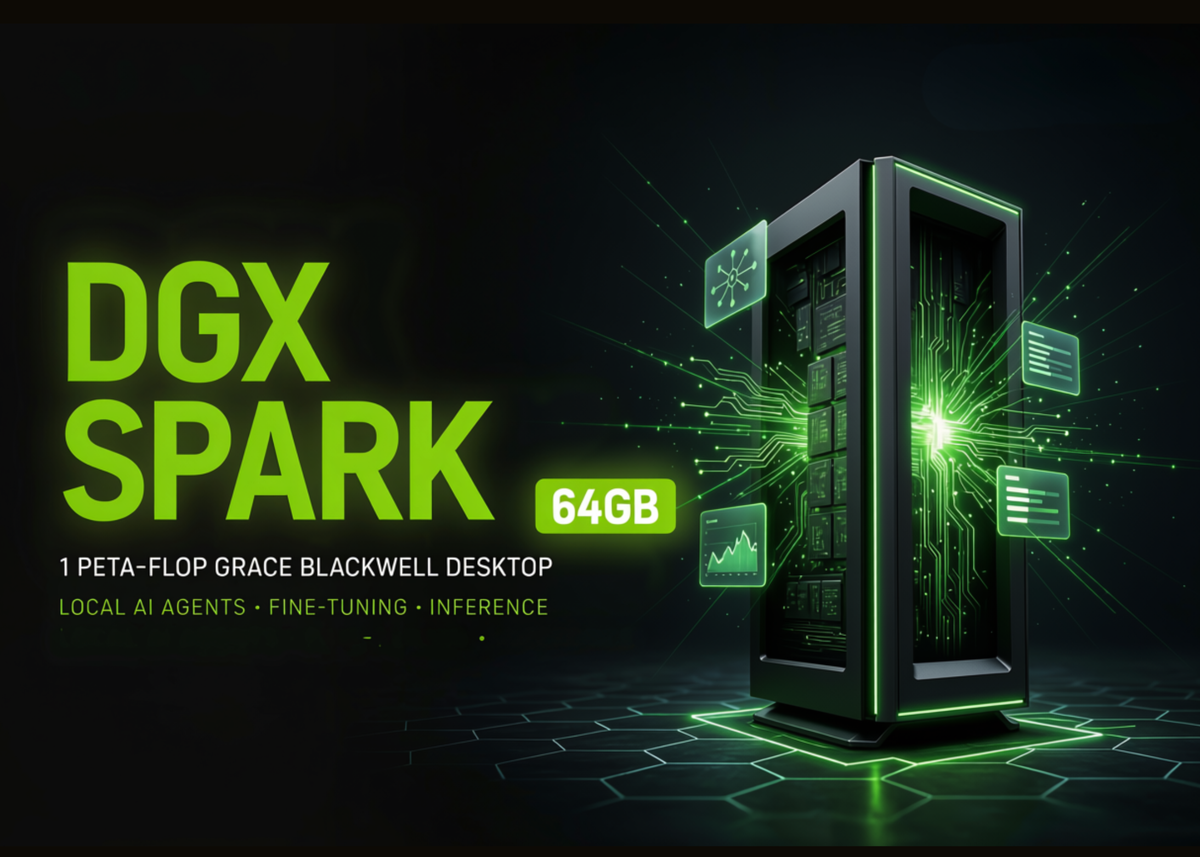
The Avocado Pit (TL;DR)
- 🖥️ NVIDIA drops DGX Spark 64GB, a desktop powerhouse for AI fanatics.
- ⚡ 1-PetaFLOP Grace Blackwell chip brings serious muscle to local AI tasks.
- 🤝 Compatible with Acer, ASUS, Dell, and more, making it the Swiss Army knife of AI desktops.
Why It Matters
NVIDIA's latest offering is like dropping a jet engine into a go-kart race. The DGX Spark 64GB is not just another desktop; it's an AI dynamo, packing a 1-PetaFLOP punch to supercharge local AI development. Whether you're a solo developer or part of a small team, this machine promises to turn your AI ambitions into reality faster than you can say "machine learning."
What This Means for You
If you're knee-deep in AI projects and your current rig feels like it's powered by hamsters, this is big news. The DGX Spark offers a tantalizing mix of power and flexibility, letting you start with one unit and scale up to two for a total of 128GB of memory. It's like having a mini supercomputer under your desk, capable of handling local models, fine-tuning, and inference with ease.
The Source Code (Summary)
NVIDIA has unveiled its DGX Spark 64GB, a desktop AI system powered by the Grace Blackwell chip, boasting 1-PetaFLOP of computing power. Available through major brands like Acer, ASUS, Dell, and more, this desktop is designed for local AI model development and scaling. Users can start with a single system and expand to a two-unit cluster, offering increased memory and computational capability.
Fresh Take
In a world where AI development feels like a high-stakes poker game, NVIDIA just laid down a royal flush. The DGX Spark 64GB is a testament to where desktop computing is headed—serious power in a compact form. But let's not kid ourselves; this isn't for your grandma's email checking. It's a tool for those ready to dive headfirst into the AI pool, giving developers the grunt needed to push boundaries, explore new ideas, and ultimately, change the game.
Read the full MarkTechPost article → Click here