The Avocado Pit (TL;DR)
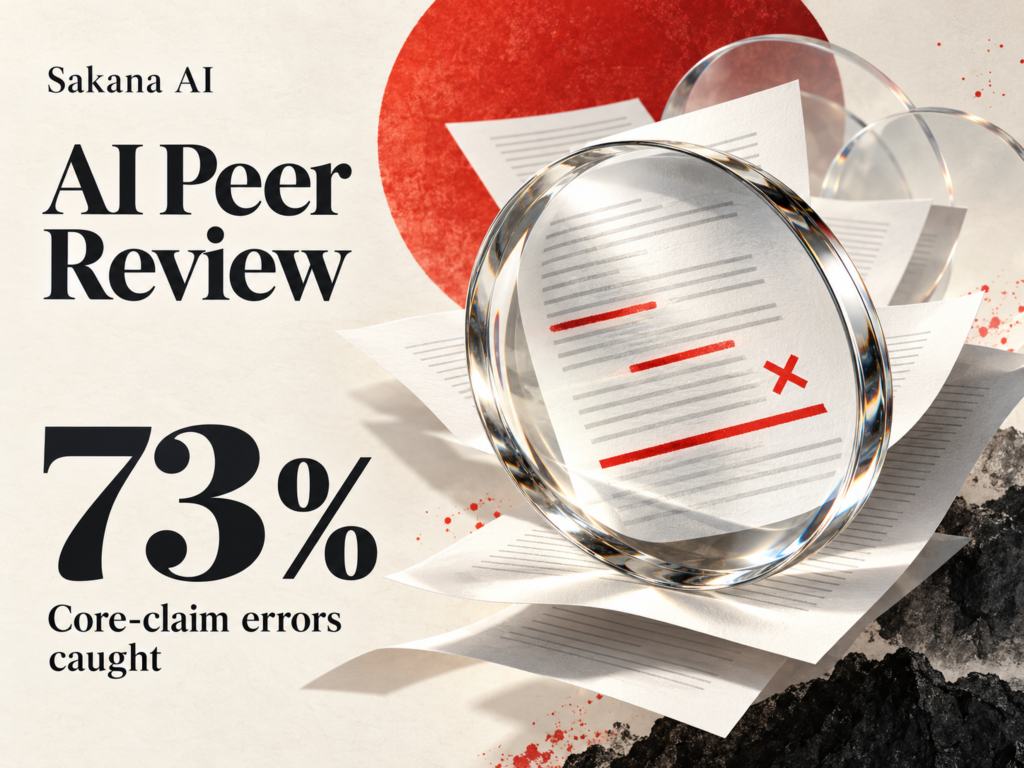
- 🥑 Sakana AI's Multi-Layered Review (MLR) system catches 73% of core-claim errors.
- 🤖 The best previous system caught only 14.81%—ouch!
- 📜 Introduces a 1,164-error Contradiction Benchmark.
Why It Matters
In the world of AI, accuracy is king. Sakana AI just turned the throne room upside down with their LLM Peer Review System. This isn't just a tweak—it's a full-blown AI intervention. Their system, built on a foundation of Claude-based reviewers and a contradiction benchmark, is catching errors like a grammar-savvy hawk at a spelling bee.
What This Means for You
Whether you're a tech enthusiast, a curious beginner, or just someone who likes to watch AI wrestle with its own contradictions, this development is a big deal. It means that AI-generated content can be trusted more, and less time will be spent fact-checking what your chatbot tells you about the history of avocado toast.
The Source Code (Summary)
Sakana AI's paper, recently highlighted in MarkTechPost, unveils a Multi-Layered Review (MLR) system featuring a 3-agent, Claude-based reviewer setup. This new system caught an impressive 73.43% of core-claim errors in testing, which is jaw-droppingly high compared to the previous best system that managed a paltry 14.81%. The backbone of this achievement? The 1,164-error Contradiction Benchmark, a tool designed to stress-test and refine AI accuracy.
Fresh Take
It's like Sakana AI just dropped a mic in the AI development world. By catching errors with a precision that makes most spell-checkers blush, the MLR system is setting a new standard. This could mean big things for AI reliability and trustworthiness. But let's not get ahead of ourselves; as always, the devil's in the details, or in this case, the contradictions. While this is a notable leap forward, remember that AI's journey to perfection is as rocky as an unripe avocado. But hey, we're getting there, one error at a time.
Read the full MarkTechPost article → Click here